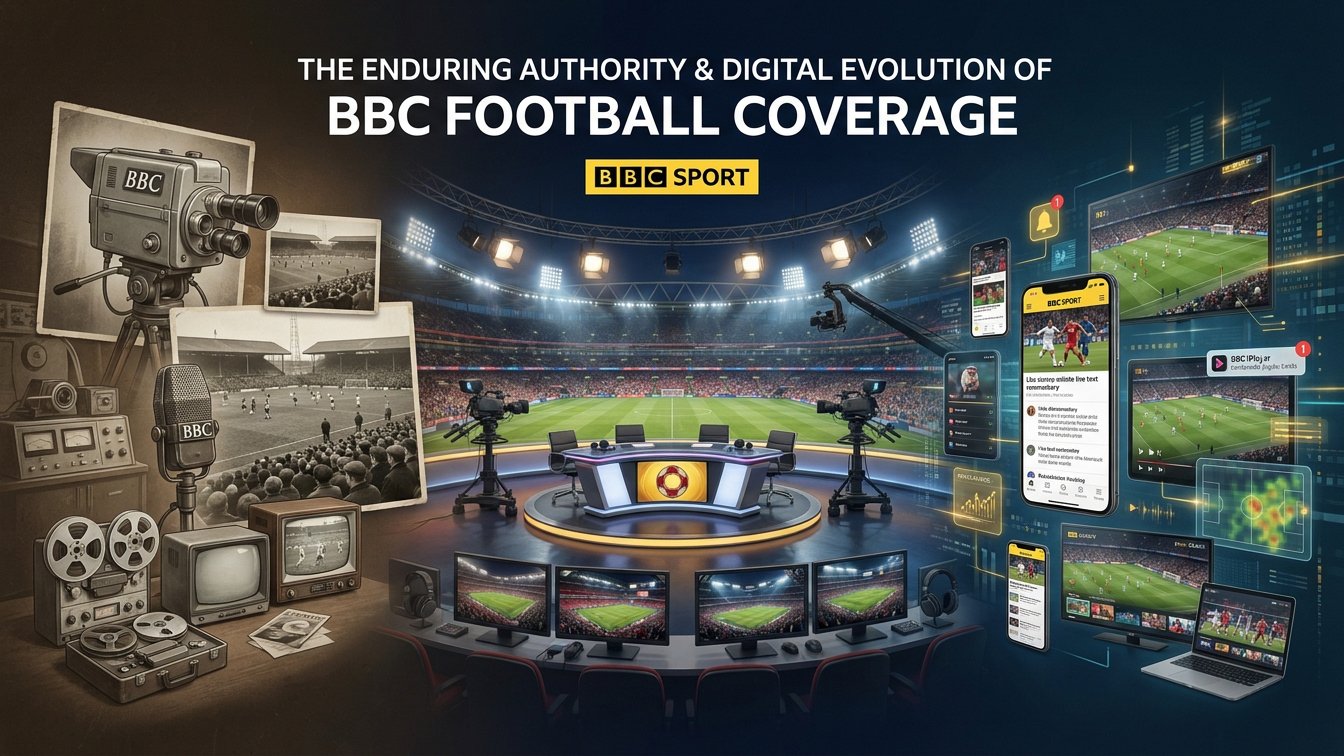
The Enduring Authority and Digital Evolution of BBC Football Coverage
For generations of supporters across the United Kingdom and around the globe, the intersection of British broadcasting and the beautiful game has been anchored by a single trusted institution. When fans search for BBC football updates, they are tapping into a legacy that stretches from early wireless radio commentaries to real-time push notifications, live text streams, and multi-platform audio analysis. The British Broadcasting Corporation has shaped how millions experience domestic league battles, international tournaments, and grassroots stories, turning matchdays into shared national rituals while adapting relentlessly to the demands of modern digital consumption.
Historical Foundations of British Football Broadcasting
Long before high-definition television broadcasts and instant social media highlights, BBC Radio brought the roar of packed stadiums directly into family living rooms. Pioneering commentators described pitch action using numbered grid diagrams printed in the Radio Times, allowing listeners to visualize every pass, tackle, and goal. This audio heritage laid the groundwork for a distinct journalistic style that prioritized accuracy, measured excitement, and impartiality over sensationalism.
The arrival of television elevated that tradition into a cultural cornerstone. Launching in August 1964, Match of the Day transformed Saturday nights across Britain, establishing a visual format for football highlights that remains recognizable decades later. By curating the defining moments of top-flight fixtures and pairing them with authoritative punditry, the program turned post-match analysis into essential viewing. Over the decades, iconic theme tunes, memorable goal calls, and seasoned presenters cemented the broadcaster’s reputation as the gold standard for football storytelling.
Unmatched Scope Across Domestic and International Competitions
A defining strength of the BBC football ecosystem lies in its sheer breadth of coverage. Rather than focusing exclusively on the wealthiest clubs at the summit of the English pyramid, editorial teams dedicate substantial resources to every tier of the sport. From the drama of the Premier League title race to the gritty promotion battles of the Championship, League One, and League Two, supporters of clubs large and small find dedicated pages, fixture lists, and statistical breakdowns tailored to their teams.
Cup competitions hold an equally prominent place in the editorial calendar. The FA Cup, with its romantic giant-killings and non-league fairy tales, receives extensive live television and radio coverage from the qualifying rounds all the way to the Wembley final. Across the border, the Scottish Premiership and Scottish Cup enjoy dedicated reporting, ensuring fans in Glasgow, Edinburgh, Aberdeen, and beyond receive comprehensive regional journalism. Internationally, major tournaments such as the FIFA World Cup and the UEFA European Championship bring record audiences together, blending live match broadcasts with tactical retrospectives and cultural features from host nations.
Digital Transformation and Real-Time Matchday Ecosystems
As audience habits shifted from scheduled television broadcasts to constant mobile connectivity, the BBC Sport website and mobile application evolved into an indispensable companion for modern supporters. On busy Saturday afternoons or midweek European nights, millions rely on live text commentary pages that synthesize goal alerts, Opta data, tactical shifts, and curated fan reactions in real time.
The personalization features built into the digital platform allow users to customize their experience around specific clubs, leagues, and competitions. Through the My Sport hub, a supporter can aggregate breaking transfer news, injury updates, live scores, and post-match manager interviews into a single streamlined feed. Furthermore, the platform’s strict editorial standards serve as a counterweight to the rumor mill of modern football journalism. While the popular daily Gossip column rounds up transfer speculation from newspapers across Europe, official club announcements and verified news reports are held to rigorous two-source verification rules, giving readers clarity on what is genuine and what remains mere conjecture.
Championship of the Women’s Game and Grassroots Initiatives
Few media organizations have played a more influential role in accelerating the visibility of women’s football than the BBC. Through sustained broadcast investment, prime-time television slots, and dedicated digital portals, coverage of the Women’s Super League and international tournaments has expanded dramatically. Major milestones, including triumphant European Championship campaigns and deep World Cup runs by the Lionesses, have been delivered free-to-air to millions of viewers, inspiring a surge in youth participation and stadium attendance.
Beyond the elite professional tiers, public service commitments drive extensive reporting on grassroots football, disability sport, and community initiatives. Campaigns encouraging local participation, highlighting volunteer coaches, and examining the financial sustainability of lower-league clubs reflect a broader mandate to serve the entire football community rather than chasing commercial metrics alone.
Audio Storytelling, Podcasts, and Radio Five Live
While television highlights and web articles capture immediate headlines, BBC Radio 5 Live and BBC Sounds represent the conversational heart of the broadcaster’s football output. Live match commentary remains an art form, delivering breathless coverage of simultaneous fixtures around the country alongside instant reaction from managers and players minutes after the final whistle.
In recent years, an expansive slate of football podcasts has allowed journalists, former professionals, and comedians to explore the sport with greater depth and personality. Daily news roundups, tactical deep dives, club-specific shows, and investigative documentaries cater to listeners during commutes and workouts. This audio-first approach fosters an intimate connection with audiences, turning complex financial regulations, coaching philosophies, and dressing-room dynamics into accessible, engaging discussions.
Investigative Journalism and Cultural Accountability
Modern football extends far beyond ninety minutes on the pitch, encompassing sovereign wealth ownership, broadcasting rights battles, player welfare, and social inclusion. Because of its public funding model, BBC football journalism maintains the editorial independence required to scrutinize governing bodies, club owners, and sporting institutions without commercial conflicts of interest.
Investigative reporting regularly examines critical issues such as concussion protocols, fixture congestion, fan governance, and discrimination within stadiums and online spaces. By combining data journalism with whistle-blower testimonies and expert commentary, these reports hold decision-makers accountable and spark national conversations about the future direction of the sport.
Navigating Challenges in a Fragmented Media Landscape
Despite its enduring popularity, the broadcaster faces intense competition in an increasingly fragmented sports media environment. Subscription television networks and global streaming platforms command the vast majority of live Premier League broadcast rights, requiring the BBC to maximize the impact of free-to-air highlights packages, live cup ties, and digital clips.
At the same time, younger audiences increasingly consume football through short-form vertical video, creator-led channels, and interactive social platforms. Adapting to these shifting habits while preserving editorial integrity, balanced analysis, and universal accessibility remains an ongoing balancing act. Through continuous innovation in digital storytelling, audio programming, and multi-platform coverage, BBC football continues to unite casual observers and devoted tacticians alike around the world’s most popular sport.
Related Article

Duit66: Understanding the Platform, Features, Online Access, and User Safety

Toongtang (ถุงตัง): Meaning, Features, Background, and Its Place in Thai Digital Culture