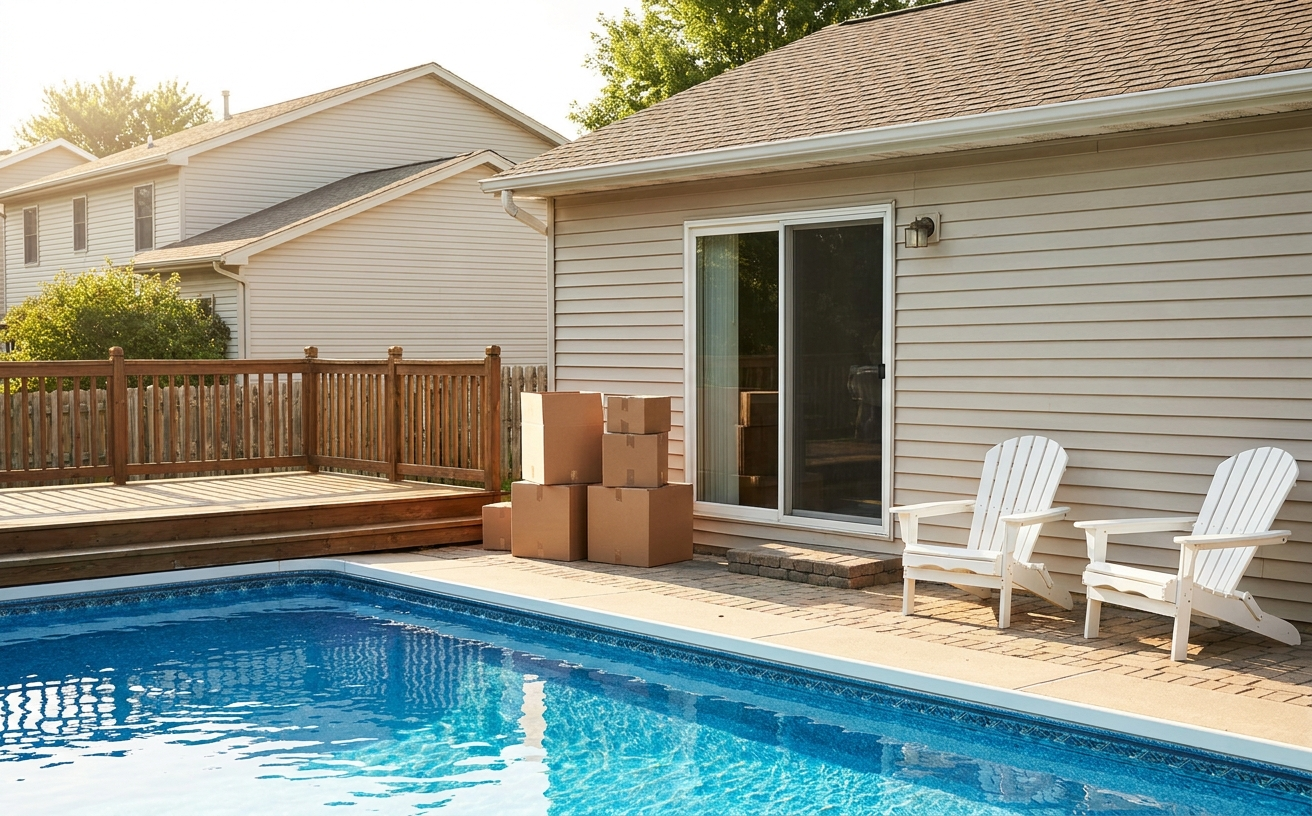
The 60-Day Pool Observation Period After Moving Into a Pool Home
Moving into a house with a pool can feel like inheriting someone else’s routine. The previous owner had their way of doing things. Their tools were stored in certain places. Their furniture faced a certain direction. Their service schedule may have made sense for their life.
But their life was not your life.
That is why new pool homeowners should give themselves a 60-day observation period before making major changes.
The first two months are not about mastering everything. They are about watching how the pool fits your household. You learn where the sun hits, where leaves collect, how your family enters the house after swimming, where towels actually land, and which parts of the previous system do not work for you.
A pool home becomes easier when you stop trying to copy the old owner and start building a routine around the people who live there now.
Week One: Learn the Layout Before the Routine
The first week should be about orientation.
Walk the pool area slowly. Notice the equipment area, storage spots, gates, lights, outlets, shade, furniture, towel access, and doorways. Take photos if helpful.
Do not worry about making everything perfect.
You are learning the map.
Where do people naturally enter the backyard? Where would guests sit? Which door will wet kids use? Where are the tools? Is the storage convenient or only convenient for the previous owner?
The layout will tell you more than any quick advice.
A new pool owner needs to understand the space before creating rules for it.
Do Not Keep Every Old System
It is tempting to assume the previous owner knew the right way to arrange everything. Maybe they did. Maybe they arranged the pool for a household that looked nothing like yours.
A retired couple may have used the pool differently than a family with young children. A serious swimmer may have organized the space differently than someone who hosts neighbors. A person without pets may not have needed a paw-dry station.
Keep what works.
Release what does not.
The old system is information, not instruction.
Watch the Wet Path
Every pool home has a wet path. It is the route swimmers take from the water to towels, bathroom, snacks, and indoor space.
During the first 60 days, watch that path carefully.
Do people enter through the kitchen? Do towels land on dining chairs? Does water collect by the sliding door? Is the bathroom too far from the pool? Does the family cross a rug with wet feet?
These small patterns matter.
They can affect flooring, laundry, cleanup, and daily comfort.
The right towel hook may be more useful than a large storage project if it fixes the wet path.
Start a Learning Resource Section
New owners need one place for pool information. Otherwise, everything gets scattered across old inspection notes, saved links, service cards, screenshots, and text messages.
Create a learning section in your home notes.
This can include service contacts, tool locations, seasonal observations, safety rules, and basic references. A homeowner may include pool maintenance for new owners in that section beside their own notes about the previous owner’s routine, current household needs, and questions to revisit after the first 60 days.
This keeps learning organized.
It also helps you avoid trying to remember everything during an already busy move.
Observe Before Buying Storage
New pool owners often buy storage too soon. Deck boxes, towel racks, bins, hooks, carts, shelves, and organizers can all seem necessary in the first week.
Wait if you can.
Watch where things naturally land first.
If towels always end up near one door, storage should probably go near that door. If toys collect by the shallow end, the toy bin should be close but not in the walking path. If tools are hard to reach, wall storage may help.
Storage should solve a real pattern.
Buying before observing can create a tidy system nobody uses.
Track Sun and Shade
Shade affects how often people use the pool area. During the first 60 days, notice where shade appears throughout the day.
Morning shade may make coffee outside pleasant. Afternoon sun may make one chair unusable. Evening shade may create a comfortable dinner spot.
Take quick photos at different times.
This helps you decide where furniture belongs and whether umbrellas, curtains, or landscaping changes might eventually help.
Do not rush shade decisions.
The yard will teach you how light moves if you give it time.
Learn the Wind Pattern
Wind matters more than many new owners expect. It moves leaves, pollen, dust, and lightweight toys. It may push debris into the same corner again and again.
After windy days, check the pool.
Where does debris gather? Which furniture shifts? Do umbrellas need to be closed earlier? Do certain trees cause more mess?
This information helps you create a smarter routine later.
Instead of reacting randomly, you learn what your yard tends to do.
That is the beginning of confident ownership.
Let Family Rules Come From Real Problems
It is fine to set basic safety rules immediately. No running. No glass. Children need supervision. Gates stay closed.
But wait before creating a long list of household rules.
Let some rules come from real patterns.
If towels become a problem, create a towel rule. If toys stay in the pool, create a toy rule. If wet feet cross the living room, create a door rule.
Rules work better when people understand why they exist.
A rule tied to a real problem feels practical, not arbitrary.
Give Each Adult One Pool Role
If more than one adult lives in the home, avoid letting pool responsibility silently fall to one person.
During the first 60 days, divide roles lightly.
One person may handle service communication. Another may manage towels. One may watch storage needs. Another may track weekend use.
These roles can change later.
The point is to prevent the pool from becoming one person’s invisible job.
New homes create enough work. Shared spaces need shared responsibility.
Keep a “Not Yet” List
There will be many ideas during the first two months. New furniture. new lighting. different landscaping. storage changes. equipment questions. hosting plans. shade improvements.
Do not act on everything immediately.
Keep a “not yet” list.
Write the idea down and revisit it after 60 days. If it still matters, consider it. If it no longer seems important, delete it.
This protects your budget, time, and attention without focusing the article on price.
It also prevents moving stress from turning into backyard overplanning.
Review at Day 30
At the one-month mark, review what you have learned.
Ask:
- When do we actually use the pool?
- What part of the old system works?
- What keeps becoming messy?
- What do we still not understand?
- What safety or comfort issue needs attention now?
This review should be short.
It helps you make small adjustments before the second month.
By day 30, some patterns will already be clear.
Review Again at Day 60
At day 60, you can make better decisions.
You have seen enough wet towels, windy days, sunny afternoons, family habits, and storage problems to know what matters.
Now adjust.
Move furniture. label bins. change towel storage. update service notes. set better swim rules. plan larger improvements only if the need is still real.
The 60-day mark is when the pool starts becoming yours.
Not because you changed everything, but because you understand it better.
Let the Home Teach You
A new pool home comes with a learning curve, but it does not need to be overwhelming. The first 60 days are a chance to observe before reacting.
Watch the wet path. Track shade. Notice the wind. Test storage. Learn the old system. Write down questions. Adjust slowly.
This patient approach helps homeowners build routines that fit their actual household.
The pool becomes less like something inherited and more like something integrated into daily life.
That is when ownership starts to feel calmer.
You are no longer living with someone else’s backyard habits. You are building your own.
Related Article

What Is SimpCity? Everything You Need to Know

Track Air India Express Flight Status Easily