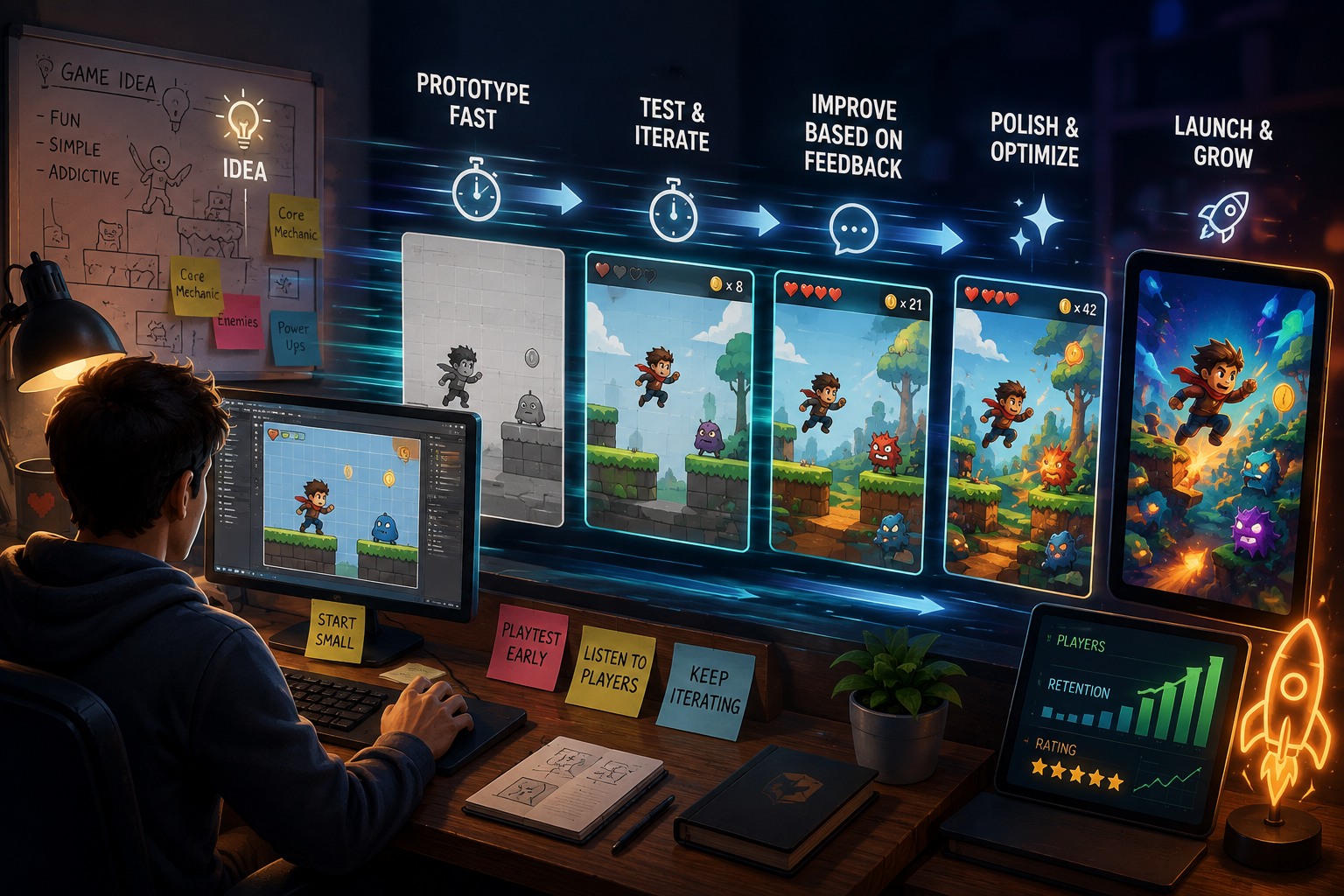
Why Faster Game Development Matters More Than Ever
Speed used to be a nice-to-have in game development, useful, but not decisive. That’s changed. The pace at which ideas can be tested, refined, and shipped has become one of the biggest factors separating creators who build something people actually want to play from creators who are still deep in development when the moment for their idea has already passed.
The Market Moves Faster Than It Used To
Player Attention Shifts Quickly
What resonates with casual and social gaming audiences can shift within months, sometimes weeks. A concept that would have landed strongly at the start of a long development cycle can feel dated by the time it actually ships if that cycle takes too long. Speed isn’t just about efficiency anymore, it’s about relevance.
Competition Has Intensified
More creators than ever have access to tools capable of producing genuinely good games, which means the window for any single idea to stand out has narrowed. Developers who can move from concept to polished release faster get more chances to find what resonates before someone else ships something similar.
Trends Reward Timing as Much as Quality
A well-made game released after a trend has cooled often underperforms a rougher one released while interest is still building. This isn’t a comfortable truth for developers who value craft over speed, but it’s a real dynamic that faster development lets creators actually respond to instead of missing entirely.
Why Slower Development Now Carries Real Costs
Ideas Lose Their Edge the Longer They Sit
A concept that felt fresh and exciting when conceived can feel stale by the time a slow development process finally produces something playable. Momentum and relevance both erode over long timelines, which is a cost that didn’t used to register as clearly when every project moved at roughly the same speed.
Slower Iteration Means Fewer Genuine Comparisons
When each version of a mechanic takes significant time to build, developers test fewer variations before committing. That means slower processes don’t just take longer, they often produce weaker final decisions, since less real comparison happens along the way.
Feedback Arrives Too Late to Act On Cheaply
Discovering that a core mechanic isn’t working after months of surrounding content has already been built is a far more expensive problem than discovering it in the first week. Slower development pushes that discovery later, when correcting course costs significantly more.
How Faster Development Actually Changes Outcomes
Catching Problems While They’re Still Cheap to Fix
Game builder platforms let developers test a core mechanic within hours instead of weeks, which means weak ideas get identified and corrected before real investment has gone into content built around them. That earlier discovery point directly improves the odds of a project reaching a genuinely strong final version.
More Releases Means More Chances to Find What Works
Games like Martial Stars: Solo Brawl reflect what a tight, fast-paced core loop looks like once it’s been refined through rapid iteration rather than a single long, carefully guessed development cycle. Faster development doesn’t just mean this specific project came together quickly, it means the developer likely had room to test other directions too, rather than betting everything on one slow, uncertain bet.
Responding to Real Feedback While It’s Still Relevant
When a development cycle stretches over many months, feedback gathered early may no longer reflect what players actually want by the time changes are implemented. Faster cycles keep feedback and response close together, which means adjustments actually address what players are currently experiencing rather than what they experienced months ago.
Why This Matters Especially for Smaller Creators
Fewer Resources Make Timing Even More Critical
A larger studio can sometimes absorb a slow, expensive project that misses its moment and still recover on the next release. Independent developers and small teams rarely have that cushion, which makes fast, responsive development not just an advantage but often a genuine necessity for staying viable long-term.
Speed Narrows the Gap With Bigger Teams
When implementation happens faster, a small team can test, iterate, and release at a pace that used to require significantly more people. That narrowed gap is part of why faster development has become such a meaningful equalizer for creators without large budgets behind them.
What Fast Development Doesn’t Excuse
Skipping Genuine Playtesting
Speed should create more room for playtesting, not less. Using fast implementation to skip testing entirely just means shipping weak decisions faster, not making better ones.
Treating the First Version as Good Enough
A quickly generated version is still a draft. Speed matters most when it’s paired with honest refinement, not when it’s used as an excuse to skip the polish that actually makes a game feel finished.
Sacrificing Design Judgment for Output Volume
Producing more content faster isn’t valuable on its own if that content hasn’t been genuinely tested and refined. Speed should serve better decision-making, not replace it.
A Practical Way to Use Speed Well
- Validate core mechanics fast, before building surrounding content.
- Use saved time for more playtesting, not just faster shipping.
- Stay responsive to current player feedback rather than working from outdated assumptions.
- Release more frequently to spread risk across smaller, better-tested projects.
- Never treat speed as a substitute for honest evaluation.
Final Thoughts
Faster game development matters more than ever because the cost of being slow has grown, missed timing, fewer tested variations, feedback that arrives too late to matter. Speed isn’t valuable for its own sake, it’s valuable because of what it makes possible: catching problems earlier, testing more genuinely, and staying responsive to what players actually want right now instead of what they wanted when development started.
The developers who benefit most from faster tools aren’t the ones racing to ship the most content. They’re the ones using that speed to make better decisions, faster, before the moment for their idea has already passed.
Related Article

Exploring M88 Sports Review: Everything Sports Fans Should Know

Discovering M88 Sports Games: A Detailed Look at the Online Experience