Is Your Website Not Loading? Troubleshooting Domain Errors Explained
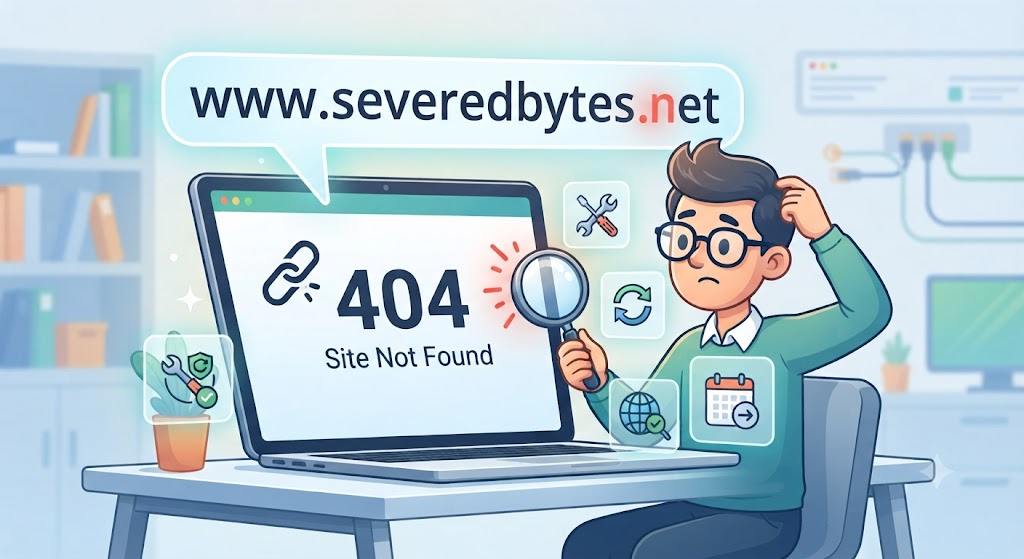
Have you ever tried to visit a website like www.severedbytesnet and found nothing there? It can be very frustrating when you are excited to see new content. Sometimes, a site might seem broken because of a tiny mistake in the web address. Websites need to be written exactly right to work. If one letter or dot is out of place, your browser will get very confused. This is a common problem for many people online. We are here to help you understand why this happens and how to fix it easily.
Why Your Browser Shows Errors
When you type an address into your browser, it acts like a digital map. If you type the wrong destination, the map will not know where to take you. A missing dot before “net” or a misspelled name changes the entire path. Your browser then tells you that the site cannot be reached. This is usually not because the internet is broken. Instead, it is just a simple communication error between your computer and the server. By checking your spelling, you can often solve the problem in seconds.
Checking for Typo Mistakes
The most frequent cause of “site not found” errors is a simple typo. Look closely at the URL you are using. Did you include the “.com” or “.net” correctly? Sometimes, we accidentally add an extra letter or forget a symbol. For example, www.severedbytesnet is missing a dot between the name and the extension. Without that dot, the browser does not recognize it as a real address. Always double-check your typing before you decide the website is actually gone.
Using the Wayback Machine
What if you are sure the link is correct but it still does not open? You can use the Wayback Machine. This is a special website that takes snapshots of the internet. It stores copies of sites from months or even years ago. If a site existed before but was taken down, you might still find it there. It is like a giant library for deleted web pages. This tool is a lifesaver for finding old information that seems to have vanished from the web.
Testing Your Internet Connection
Sometimes the issue is not the website at all. It might be your own internet connection acting up. You can test this by trying to open a popular site like a search engine. If that works, your internet is likely fine. However, if nothing opens, try turning your Wi-Fi off and on again. You could also try using mobile data on your phone. If the site works on mobile but not on your computer, your home network might be the problem.
Clearing Your Browser Cache
Your browser likes to “remember” websites to make them load faster next time. This is called a cache. But sometimes, your browser remembers an old or broken version of a site. When the site gets updated or moves, your browser might get stuck on the old data. Clearing your cache and cookies forces your computer to look for the newest version of the page. You can usually find this option in your browser settings menu. It is a quick and simple fix.
Running a DNS Flush
A DNS acts like a phonebook for the internet. It turns names into numbers that computers understand. Occasionally, this phonebook gets outdated information. This can cause you to see errors even if the website is actually working fine for others. You can fix this by doing a “DNS flush” on your computer. This clears out the old entries and forces your machine to get fresh information. It sounds very technical, but it is actually a very standard step for troubleshooting.
Checking Domain Registration Status
If a website was once popular and is now gone, the owner might have stopped paying for it. Domains must be renewed every year. If the owner forgets, the site disappears. You can check this by using a WHOIS lookup tool. This tool shows you when a domain was created and when it expires. If the status says “expired” or “redemption,” it means the domain is no longer active. This is a common reason why older websites suddenly go offline.
Understanding SSL Certificates
Sometimes you might see a “Privacy Error” when trying to visit a page. This often happens because the site’s security certificate is expired. An SSL certificate is a digital shield that keeps your data safe. If this shield is missing or broken, browsers will block the site to protect you. You should never ignore these warnings. If you own a site, always make sure your security certificates are updated. This keeps your visitors safe and helps your site stay online.
What to Do When a Site Moves
Websites do not always stay in the same place forever. Sometimes, a company will move to a brand-new domain name. They should set up a redirect to send you to the new address automatically. If they forget this, you might be left with a broken link. You can search for the name of the project or company in a search engine. Often, the new website will appear right at the top of the results.
Staying Patient with Tech
Technology is wonderful, but it can be a bit temperamental sometimes. If a site is not loading, do not get too upset. Most of the time, the fix is very easy and only takes a minute. Remember to check your spelling, clear your history, and try a different device. By staying calm, you can solve almost any digital mystery you encounter. The internet is a massive place, and learning how to navigate it is a very useful skill.
Biography Table: Understanding Domain Health
| Feature | Importance | Action to Take |
| Domain Name | The address of the site | Ensure correct spelling and dots |
| DNS Cache | The digital phonebook | Flush cache if site is unreachable |
| Browser Cache | Saved site information | Clear cookies for a fresh load |
| SSL Certificate | Site security shield | Check for valid, secure connections |
| WHOIS Data | Ownership registration | Verify if the domain is still active |
Frequently Asked Questions (FAQs)
1. Why does my browser say “site not found” for www.severedbytesnet?
It is likely because the URL is missing a period. Always ensure the domain has the correct structure, such as “example.com.”
2. Can I fix a broken website myself?
You can fix issues related to your own connection or browser, but you cannot fix a website that the owner has deleted.
3. Is it safe to visit sites with security warnings?
No. If your browser shows a security warning, it means your connection is not private. It is best to stay away.
4. How do I know if a website is down for everyone?
Use a tool like “Down For Everyone Or Just Me” to check if the site is experiencing a server-wide outage.
5. Why is the Wayback Machine useful?
It allows you to view historical snapshots of websites that may no longer be active or have changed their content.
6. Does clearing my cache delete my passwords?
Usually, no. Clearing your browser cache removes temporary files, but it does not delete your saved account passwords.
Related Article

etruesports.co.uk Sports: Complete News & Insights
Fixing Dropbox Error Code 8737.idj.029.22: A Simple Guide